THE RITUAL
From stone to myeong-yeon — a silent journey
Master Noh Jae-kyung does not merely carve stone.
He reads the story the raw stone holds,
waits until conviction takes form,
and only then picks up the tools.
Act I
원석을 만나다
The Encounter
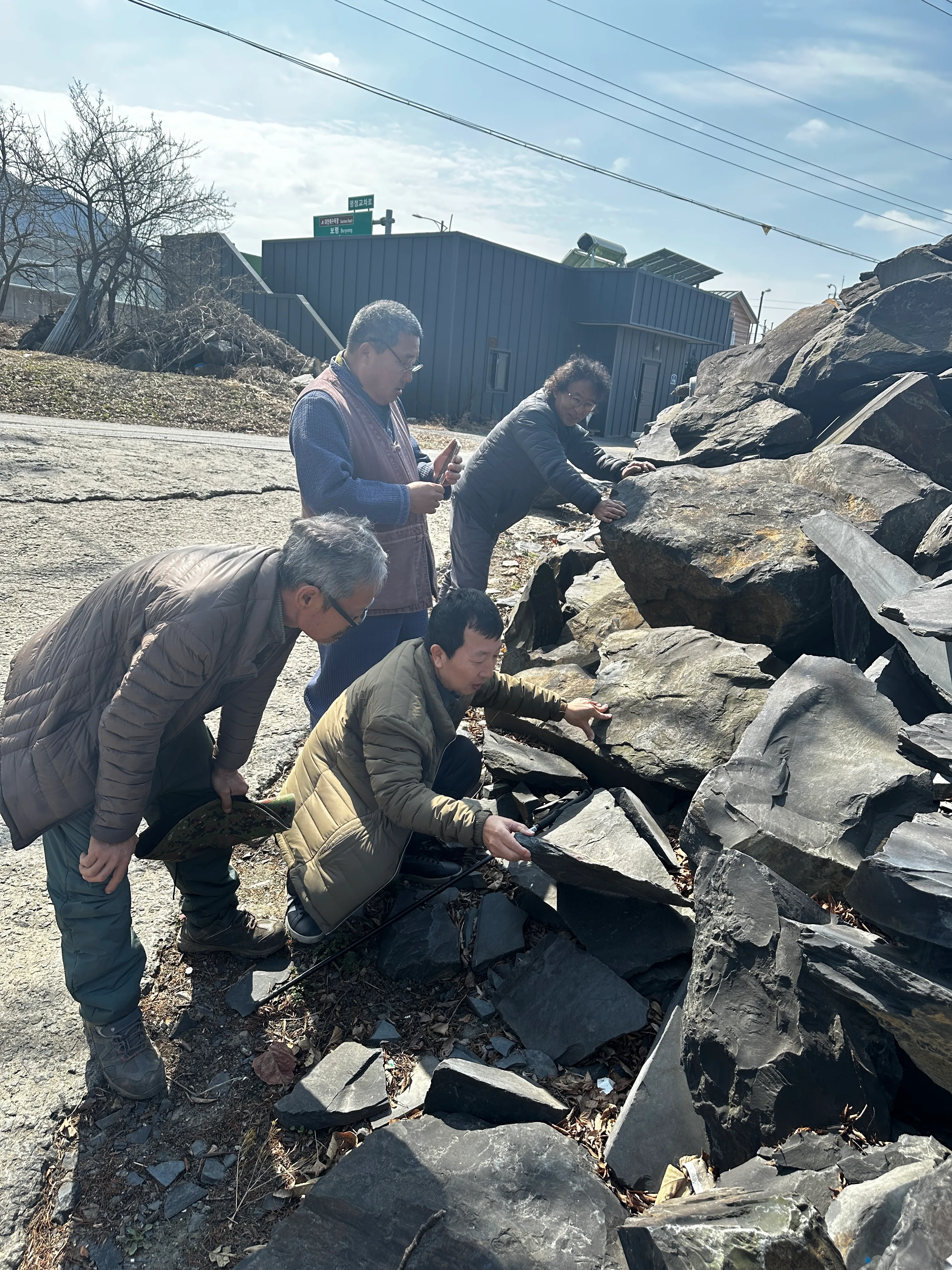
In the rugged ebony stones of Mt. Seongju in Boryeong, hidden potential and classical beauty are uncovered.
Among Boryeong Nampo ebony stones, only the finest are chosen through a careful selection process. Formed 100 million years ago in the Mesozoic Cretaceous, this dense, solid stone carries a rare silver-sand composition that grinds ink finely and yields a lustrous tone — an unrivaled quality of stone.
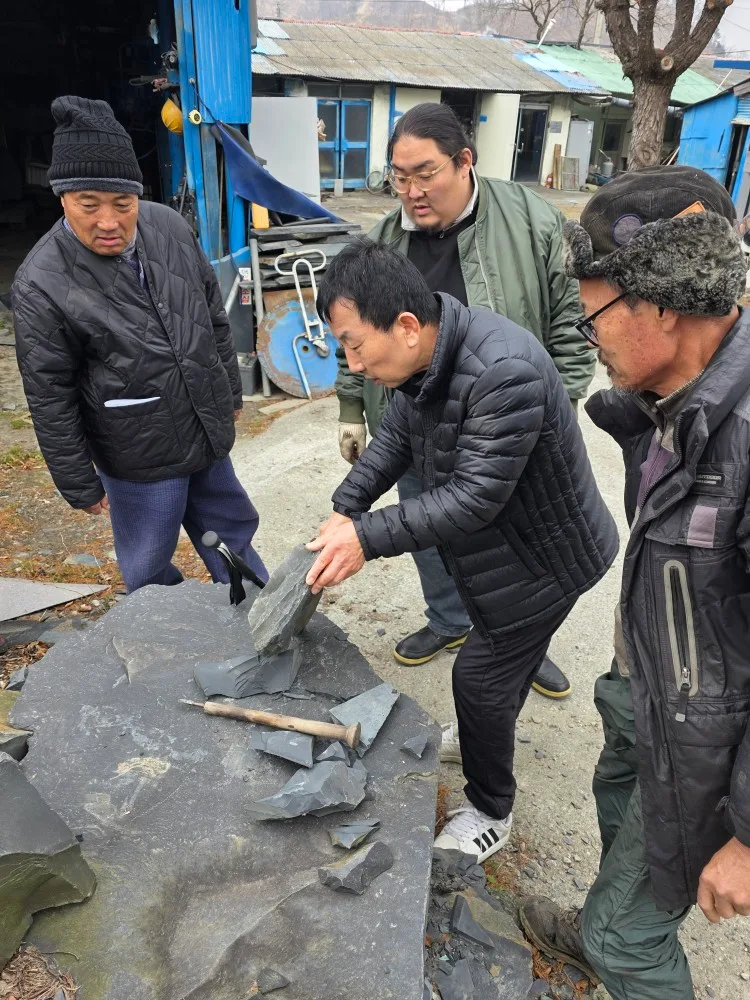
Insisting only on the finest stone
Selection of the finest stone
Nampo stone comes in two varieties — baekun-sang-seok and pyongri-sanmun-sang-seok. The master inspects each stone's grain, color, weight, and sound, choosing only those worthy of becoming an inkstone. Of dozens of raw stones, only a handful ever become a finished work.
2
varieties of stone
baekun-sang-seok · pyongri-sanmun-sang-seok
100M
years in formation
Mesozoic Cretaceous strata
50+
years of mastery
began in 1974
Only after thought and story crystallize does he carefully pick up the tools and immerse himself in the work.
Act II
구상하다
The Contemplation
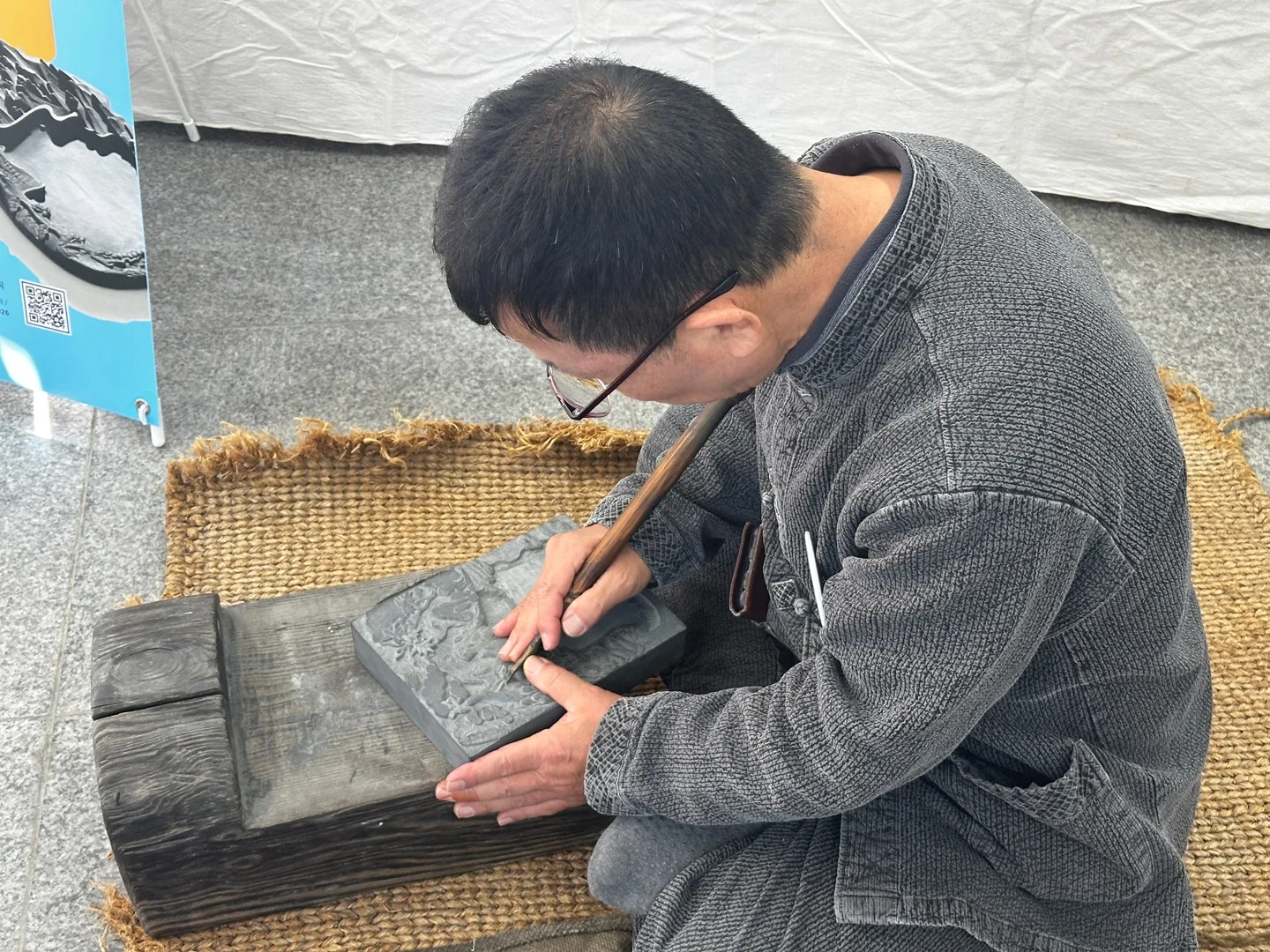
He contemplates deeply and patiently while observing each stone's unique form. Rather than merely carving, he waits until his thoughts and stories crystallize — to draw out the finest stone quality and patterns hidden within.
Which patterns to carve, what to preserve and what to cut away — every decision emerges from his dialogue with the stone, shaped so that the raw stone's form and character are enhanced.
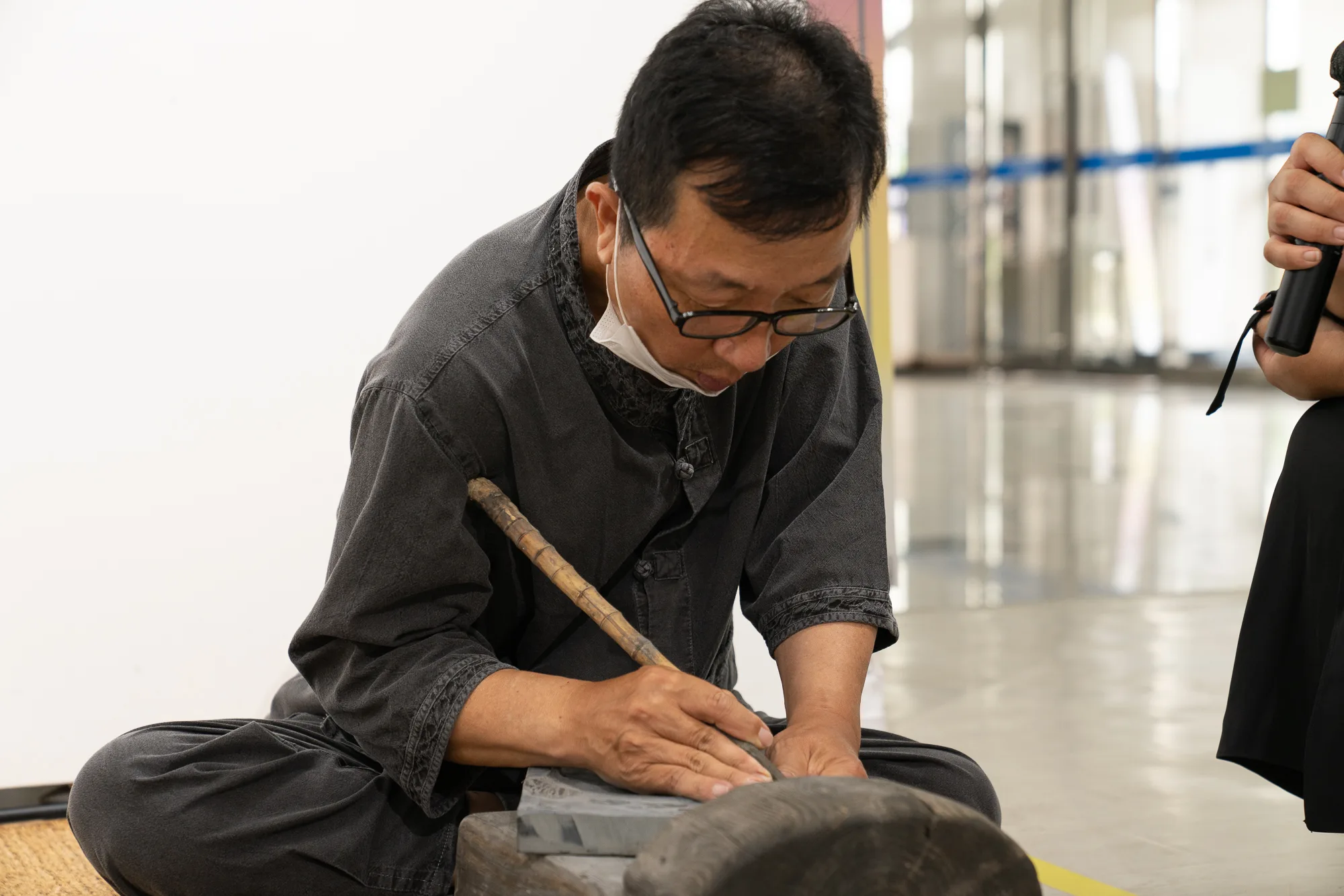
Dialogue with stone
Dialogue with stone
Phoenix, plum, dragon, turtle, grape, the ten longevity symbols — the values and emblems cherished by East Asian intellectuals are placed with exquisite precision on the inkstone's surface, edges, and lid. Each motif is not the master's arbitrary choice, but the manifestation of the story the raw stone already held.
The moment conviction takes hold, he carefully picks up the tools and immerses himself in the work.
Act III
이름을 부여하다
The Naming
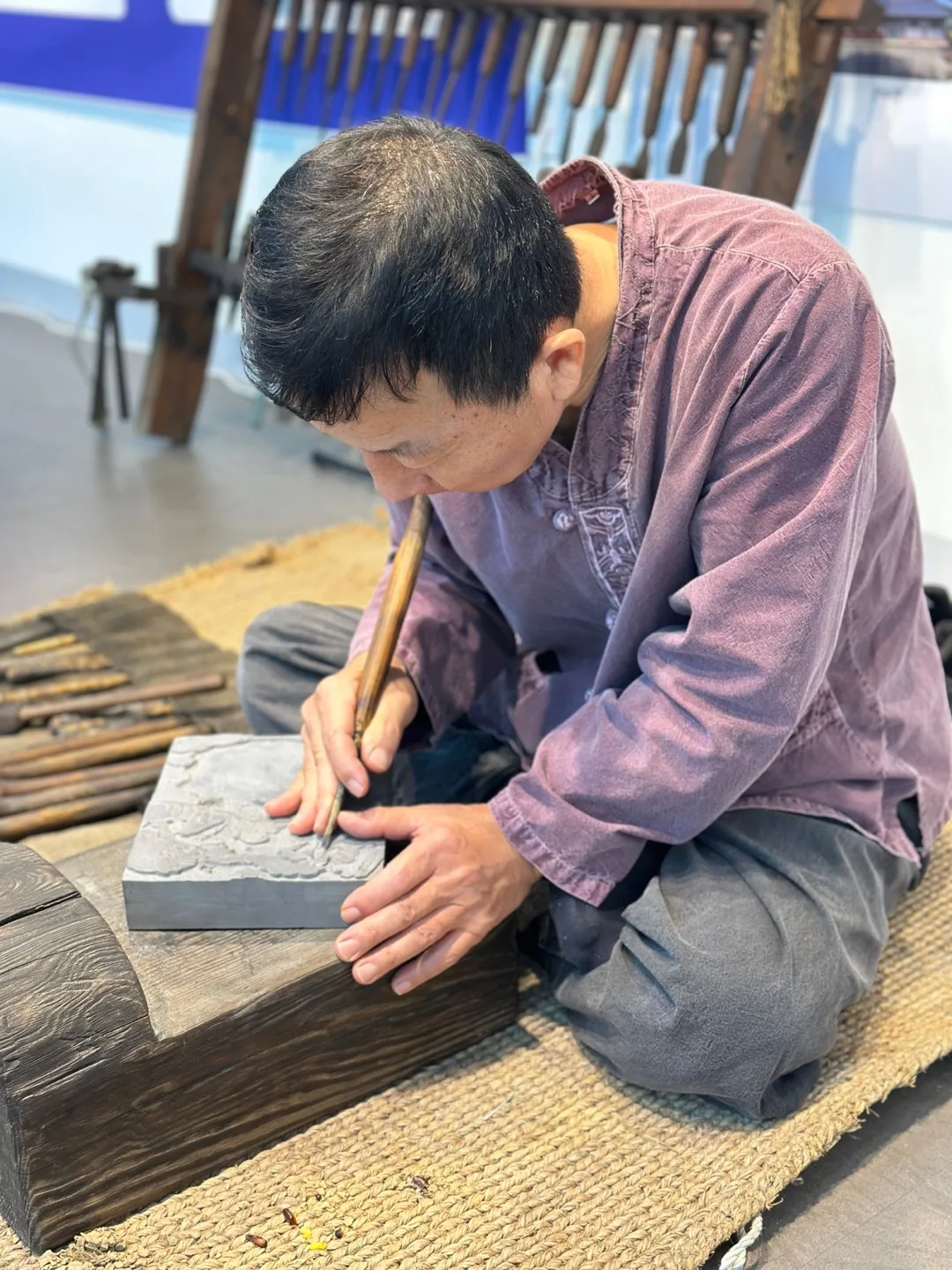
Through extraordinarily delicate engraving, classical function and artistic mastery are united. What was once natural stone is reborn as a singular work, earning a new and eternal name: myeong-yeon (名硯), the celebrated inkstone.
Meticulously carved in relief to elevate completeness, each piece is finished with careful restraint. Through this process, an artistic bridge is completed — one where past meets present, and region meets world.
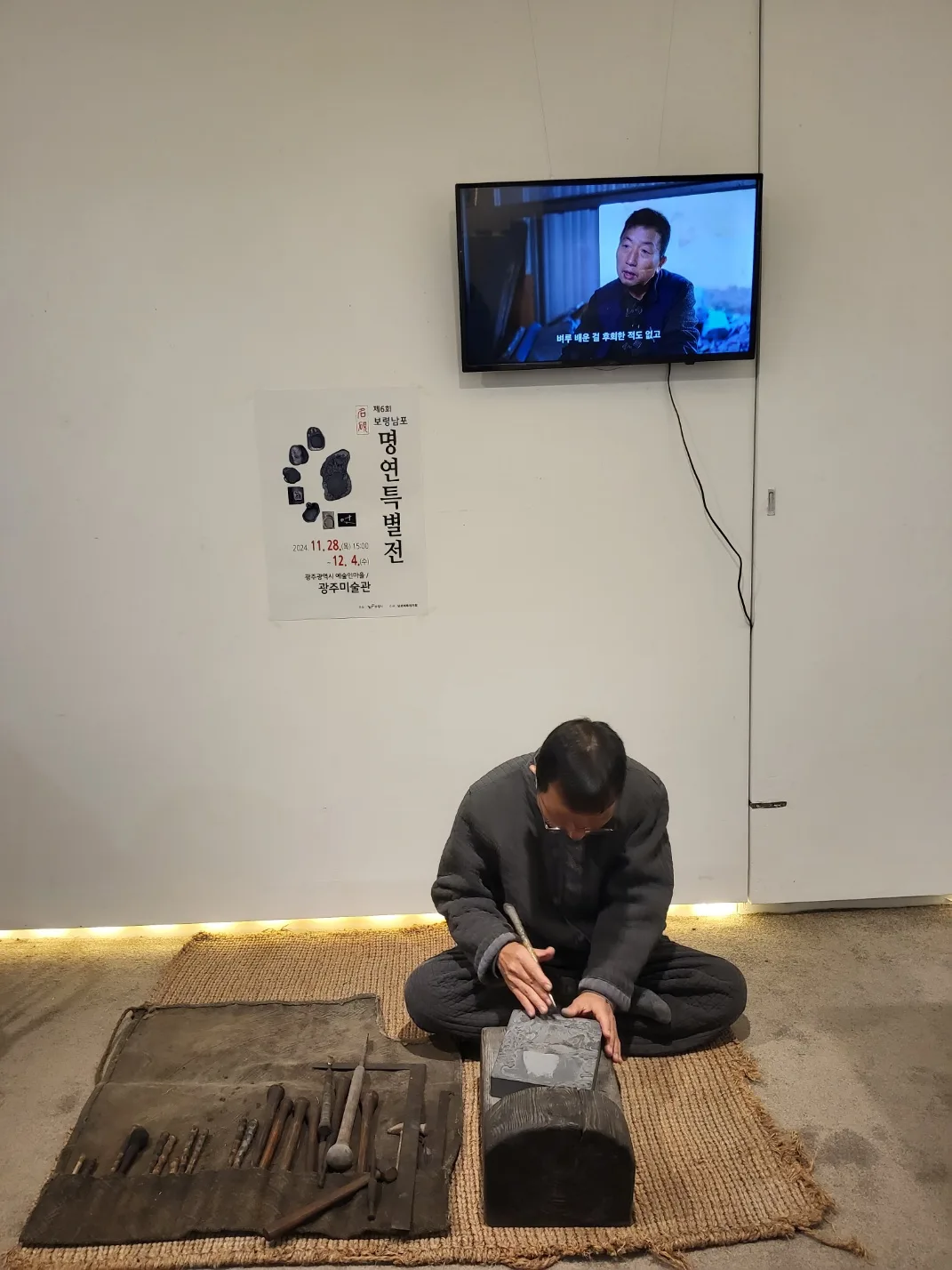
Birth of a myeong-yeon (名硯)
Birth of a masterwork
Each completed inkstone is given a name: Mubongmun Inkstone (舞鳳紋硯), Maejomun Inkstone (梅鳥紋硯), Woonyongmun Inkstone (雲龍紋硯). These are not mere titles — they are identities distilled from the 100 million years the stone has traveled and the master's contemplation.
The stone earns a new, eternal name.
What was once natural stone is reborn as a work, earning a new and eternal name — myeong-yeon.
View the masterpiece collection →Studio visits & commissions
At Seokjeon Yeondang Studio you may observe the master's process firsthand.
For visit appointments and commissions, please contact us at the email below.